
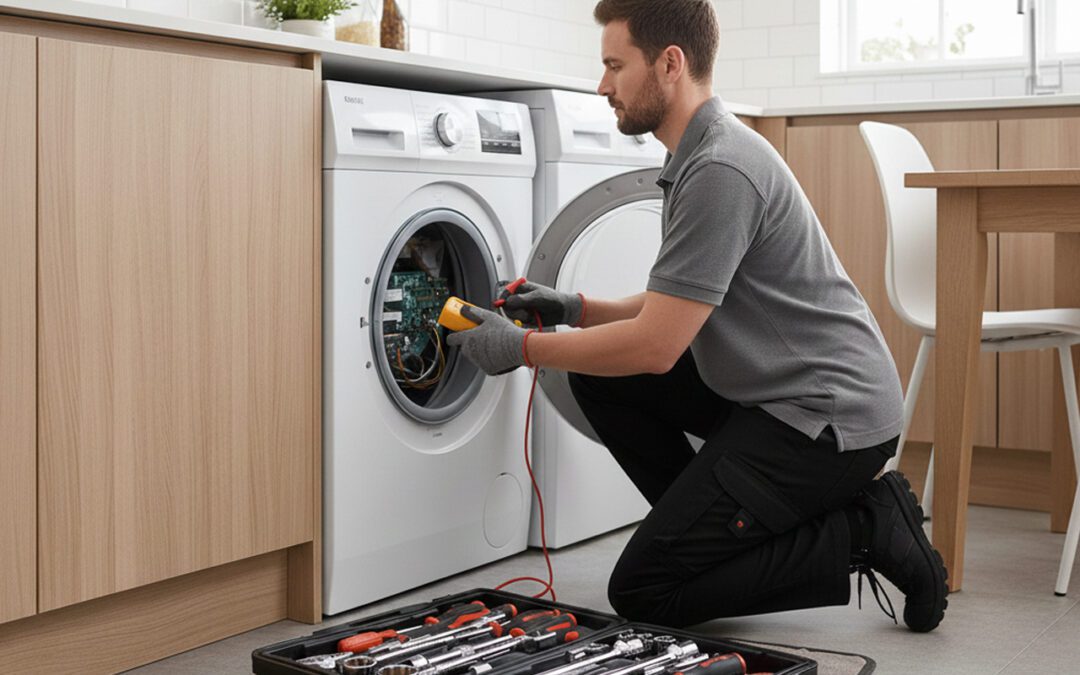
When your washing machine breaks down, deciding between repair and replacement can be challenging. Several factors, including the appliance’s age, fault type, repair cost, and long-term reliability, should be considered before making a choice.
Consider the Age of Your Washing Machine
The average lifespan of a washing machine is between 7 and 12 years. Machines under 5–7 years old with minor faults are usually worth repairing. Older machines may experience recurring issues, making replacement more cost-effective in the long term.
The 50% Repair Rule
A common guideline is that if the repair cost exceeds 50% of the price of a new washing machine, replacement is often the better option. For example, spending £120 to repair a machine that costs £200 new may not be financially sensible, whereas repairing a newer unit for £100 is reasonable.
Type of Fault
Minor issues, such as blocked filters, leaking hoses, or simple electrical faults, are usually cheap and easy to fix. Major issues like motor failures, drum problems, or electronic control faults are more expensive and may indicate further wear.
Energy Efficiency and Features
Modern washing machines are generally more energy and water-efficient than older models. Replacing an older appliance with a new energy-efficient model can reduce running costs and provide additional features, such as quieter operation and faster wash cycles.
Safety Considerations
Electrical faults or leaks in a washing machine can pose safety risks. Even if repair is possible, replacement may be safer for older machines with multiple faults.
Getting Accurate Repair Quotes
Request itemised quotes from multiple engineers, including call-out fees, labour, and parts. Providing details about the washing machine make, model, and fault ensures accurate pricing. For more information on costs, see washing machine call-out fees and why repair quotes vary.
Repair vs Replacement Decision
Repair is usually best for newer machines with minor faults. Replacement is recommended for older machines, complex faults, or repeated failures. Consider safety, running costs, and long-term reliability when deciding.
Conclusion
Deciding whether to repair or replace a washing machine requires assessing age, fault type, repair cost, and energy efficiency. By obtaining detailed quotes and weighing these factors, UK homeowners can make an informed decision that saves money and ensures appliance reliability.